
JOB-PLANT
Toronto, Ontario
The machine is a lift core with a mast on top.
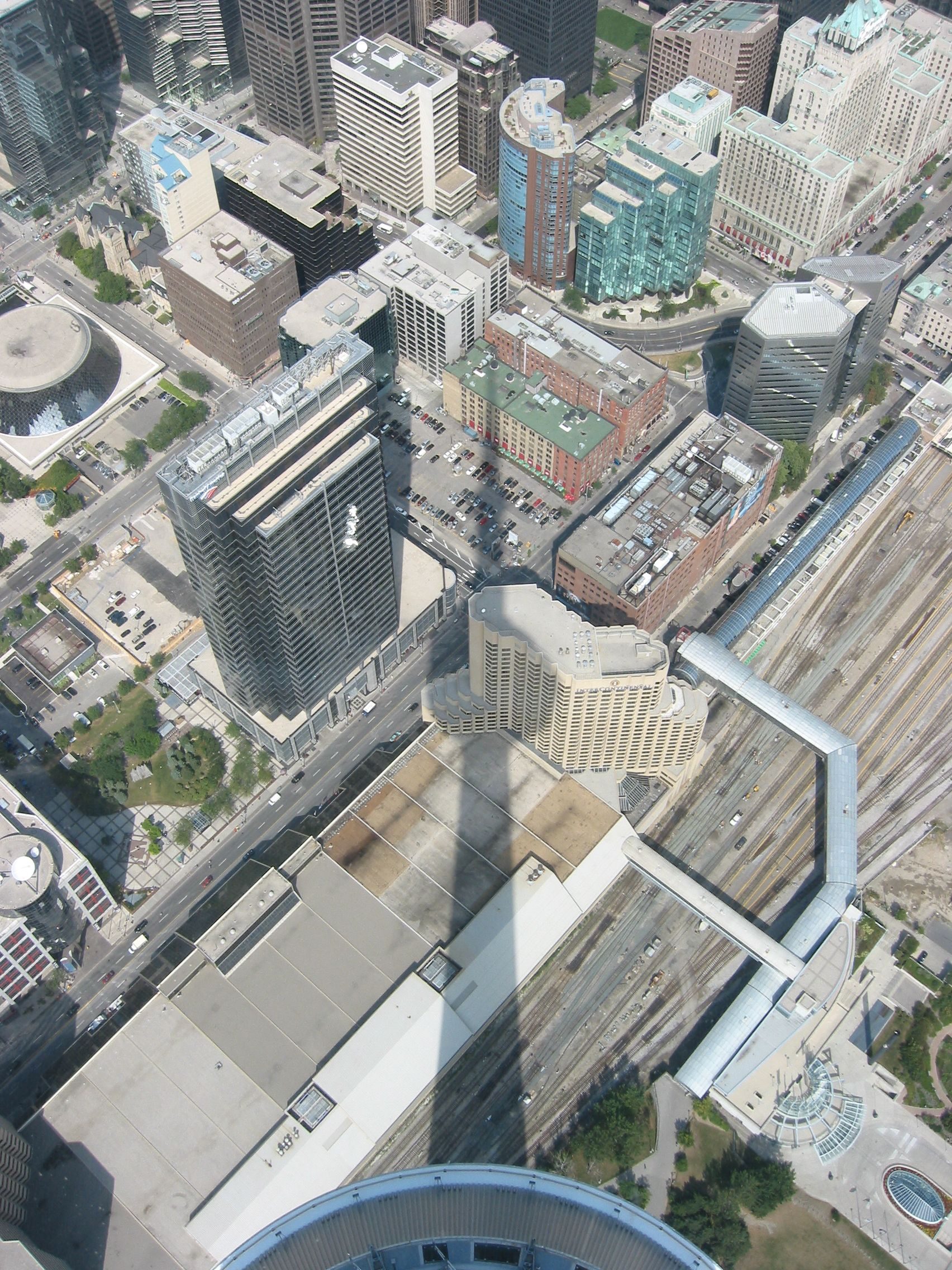
I did not fall in love with a view. I fell in with a plant that has to run on a schedule, in wind, with a crowd standing on glass. This page is the iron, written so you know what you are standing in.
Lifts
Fifty-eight seconds, lobby to the main observation deck, is the number I still carry. That is a healthy car, a clear hoistway, and no one holding doors for a photograph. Weekend late morning the queue is people, not cable. If you are timing a half day from Union, budget the lobby as its own event. The ride itself is short. The wait is not always short.
Cars are counterweighted, guided, and bored of your excitement. They do not care about timed entry. They care about load, door cycles, and whether the wind lock-out has been called on the upper plant. When the wind is up, the top pod is the first thing the crew protects. That is not a surprise. That is the machine doing its job.
Wind
The mast is designed to move. If you expect a 553-metre tower to stand like a brick chimney you will invent a problem that is not there. On a stiff day you may feel the sway in the top pod more than on the main deck. That is geometry, not failure. I used to walk those levels with a wrench in my pocket and a hand on the rail. The steel was doing what the drawings said it would do.
Lightning
About seventy-five strikes a year is the working figure I was taught and never saw a reason to argue with. The tower is a very tall ground rod. The charge goes into the structure and down. You will not stand on the observation deck and "watch lightning hit" as a show. If a cell is on the lake, you will more likely get a delay, a closed outdoor terrace, or a grey wall. Plan around the cell, not around a photograph of a strike.
The glass floor, from the plant side
People talk about the glass floor as if it were a trick. It is laminated plate in a steel frame, on the order of two and a half inches of glass in plies. It is thick enough for a crowd. It still fogs, still scuffs, still collects a queue of people who want the same photograph. If you came for the skyline, do not spend your timed window shuffling for a pane. If you came for the pane, go early or go late, and accept that someone will be in your shot.
The outdoor terrace is weather plant, not a lounge. Wind, ice, and lightning close it. The harness walk outside is a separate, slower operation with its own briefing and its own weather veto. I describe it only as the harness walk outside because that is what it is: a harness, a walk, outside.
Gordie Hall · mill notes, not a ticket window